

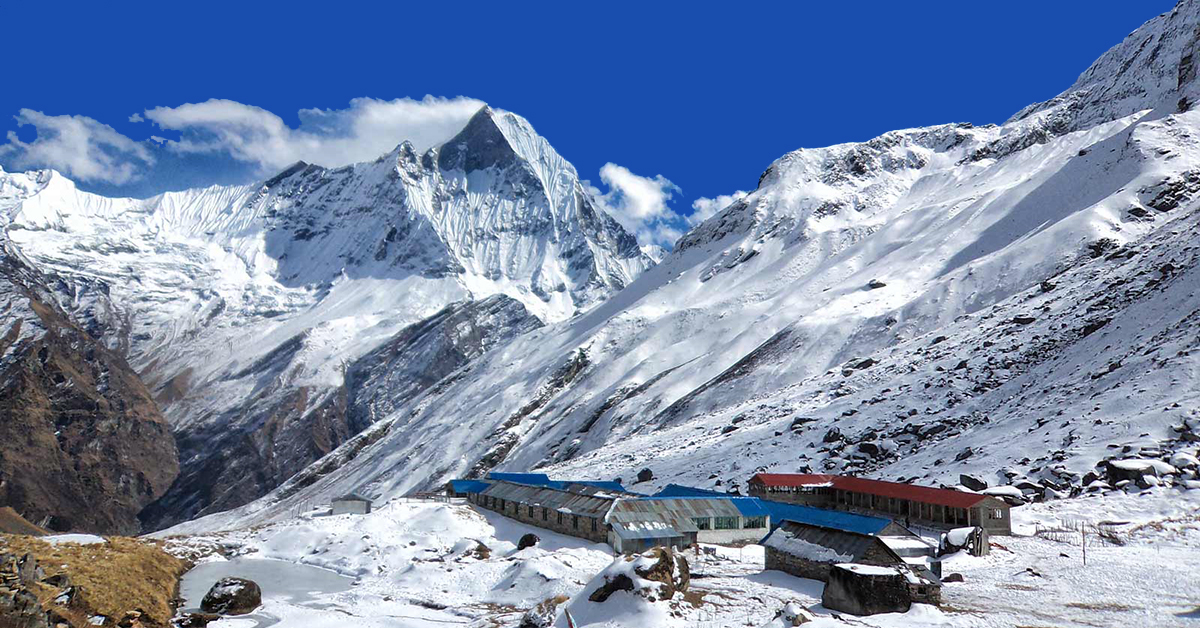
The Annapurna Base Camp Trek is an iconic adventure in Nepal, offering trekkers a breathtaking journey through the heart of the Himalayas. This trek takes you on a scenic route through lush forests, terraced fields, and traditional Gurung and Magar villages, culminating in the awe-inspiring Annapurna Base Camp at an altitude of 4,130 meters (13,550 feet).
As you traverse diverse landscapes, you'll be rewarded with panoramic views of some of the world’s highest peaks, including Annapurna South, Annapurna I, and Machapuchare, often referred to as “Fishtail” due to its unique shape. The trek typically spans 7 to 12 days, providing ample opportunity to acclimate and explore the stunning Annapurna Sanctuary, a natural amphitheater surrounded by majestic mountains.
Ideal for trekkers with moderate fitness levels, the Annapurna Base Camp Trek offers a perfect blend of adventure, cultural immersion, and natural beauty, making it a must-do trek for those seeking an unforgettable Himalayan experience.
Your adventure starts in Kathmandu, Nepal’s vibrant capital nestled in the Himalayas. Often called the “City of Temples,” Kathmandu boasts a rich tapestry of pagodas, shrines, and monasteries where Hindu, Buddhist, Sikh, and other communities practice their faith. As your plane lands at Tribhuvan International Airport, you’ll catch your first glimpse of this captivating city. A representative from Alpine Ramble Treks will greet you and transfer you to your hotel. There, you'll meet your trekking guide, receive detailed information about the Annapurna Base Camp Trek, and settle in for a restful night.
After breakfast at your hotel, we’ll set off for Pokhara in a comfortable tourist bus. The journey takes around six to seven hours, but the scenic drive will keep you engaged. As we leave Kathmandu behind, you’ll be treated to stunning views of Nepal’s rural landscapes, including lush jungles, terraced barley fields, sparkling glacial rivers, and towering icy mountains. Upon arriving in Pokhara, you’ll quickly see why it’s a hotspot for adventure seekers, offering activities like hang gliding, bungee jumping, zip-lining, and whitewater rafting. However, Pokhara is also the gateway to the Annapurna Base Camp Trek, and our hike will begin tomorrow. For tonight, we’ll stay at one of the top local hotels and enjoy a hearty meal before getting a good night’s rest.
After breakfast, we’ll take a short drive to Nayapul, where the Annapurna Base Camp Trek begins. Our adventure starts with crossing a bridge and approaching the Modi River, as we immerse ourselves in the lush greenery of the Nepali forest. Today’s trek will feature suspension bridges, terraced hills, and cascading waterfalls. We’ll pass through charming villages where you can grab some refreshments before reaching Tikhedhunga after about four to five hours of walking. We’ll stay overnight in one of the welcoming teahouses here. After dinner, take a leisurely stroll around town, and if the skies are clear, you’ll be treated to stunning views of the iconic Machapuchare, or Fishtail Mountain.
Get ready for a workout! Our second full day of hiking on the Annapurna Base Camp Trek features a challenging climb known for its long stone staircase, which begins just after we cross the Tikhedhunga Khola river. There are said to be anywhere from 1,000 to 3,000 steps—see if you can keep track! We’ll ascend at a steady pace through terraced cornfields to reach the charming hillside village of Ulleri, where we can enjoy lunch and chat with the locals. Continuing on, we’ll trek through vibrant rhododendron forests filled with colorful birds. As we approach Ghorepani, renowned for the nearby Poon Hill viewpoint, the majestic Himalayan peaks will capture your attention. We’ll save the breathtaking mountain panorama for tomorrow, and for now, we’ll relax with a hearty meal and a comfortable stay at our trekking lodge in Ghorepani.
This morning, we’ll ascend to the famous viewpoint of Poon Hill to witness a stunning sunrise over the Himalayan peaks, including Annapurna I and Dhaulagiri. In spring, the vibrant rhododendron blooms add to the spectacular scene. After savoring a cup of tea and soaking in the majestic views of these towering 8,000-meter giants, we’ll set off for Tadapani. Our route takes us through beautiful rhododendron and pine forests, offering some incredible views along the way. Once we reach Tadapani, you’ll be captivated by the close-up vistas of Machapuchare and Hiunchuli. We’ll choose the best available trekking lodge or teahouse for a comfortable overnight stay in Tadapani.
On our next day of the Annapurna Base Camp Trek, we'll follow a stone trail descending through the forest from Tadapani, passing vibrant prayer flags and mani walls. These mani walls, adorned with Buddhist mantras inscribed or painted on smaller stones, are a hallmark of the Himalayas and will undoubtedly feature in many of your favorite photos. Our descent leads us to a suspension bridge over the Khumbu Khola river, followed by a climb through a quaint Gurung village. At the top, we'll be rewarded with a stunning view of the snowy summit of Machapuchare. After approximately four to five hours of trekking, we'll arrive in Chhomrong, situated at 2,170 meters and one of the highest inhabited villages in the Annapurnas. We’ll choose the best available lodge for a well-deserved rest and overnight stay.
After several days of trekking in the western Himalayas, our next destination on the Annapurna Base Camp Trek will be the small cluster of lodges known as Himalaya. To reach it, we’ll descend from Chhomrong, cross a suspension bridge over the Chhomrong Khola, and continue on the trail to Sinuwa. Along the way, we’ll pass through lush green forests and admire iridescent waterfalls. The ridgeline at Sinuwa offers stunning mountain views that are among the best we've encountered so far. From there, the trail alternates between ascents and descents through bamboo forests, where we might spot langur monkeys. Once we arrive at Himalaya, we’ll rest up and prepare for the adventures that await us tomorrow.
Today promises to be the most thrilling day of our Annapurna Base Camp Trek. We’ll have the unique opportunity to visit two base camps within just a few hours. Our journey takes us across ancient glacial moraines and through birch forests as we approach the stunning Annapurna Sanctuary. While there is a risk of avalanches, we’ll check trail conditions with locals to ensure safety before continuing.
Our first stop will be Machapuchare Base Camp, where the majestic peaks of Annapurna I, Annapurna III, Annapurna South, and Hiunchuli create a breathtaking panorama. Though it seems hard to imagine a more spectacular view, we still have a few more hours of trekking and a final ascent ahead.
Our ultimate destination, Annapurna Base Camp, awaits with unparalleled splendor. The Annapurna massif stretches over 50 kilometers of Himalayan terrain, and the Annapurna Sanctuary offers an incredible vantage point to appreciate its grandeur. Take your time to revel in our achievement and capture the limitless photographic opportunities. Afterward, we’ll relax in our lodge at base camp and enjoy a hearty meal before settling in for the night.
Our return journey from Annapurna Base Camp is much easier than the trek to get here, so we’ll have plenty of time to enjoy a leisurely breakfast as the sun rises over the mountains. Witnessing the peaks of Annapurna South, Annapurna I, Annapurna III, and Machapuchare bathed in golden light is a moment you’ll cherish forever. After breakfast, we’ll start our descent to Bamboo, a quaint settlement nestled near a rhododendron and bamboo forest. We’ll spend the night here after approximately five to six hours of trekking.
Just when you thought the climbing was behind you, the Annapurna Base Camp Trek has a final surprise! Today, we’ll ascend through shaded woodlands as we make our way back to Chhomrong. Our destination is the charming village of Sinuwa, where we’ll select a cozy teahouse for the night. One of the highlights of our visit to Sinuwa is the nearby natural hot springs at Jhinu Danda. There’s nothing more relaxing than soaking your tired muscles in the soothing waters while enjoying the serene forest setting along the Modi Khola. After a refreshing dip, we’ll head back to our lodge for a delicious dinner and a well-deserved rest.
Our final day of hiking on the Annapurna Base Camp Trek takes us over familiar terrain. After breakfast, we’ll begin our descent towards Nayapul, crossing suspension bridges, passing through terraced farmlands, and following the bank of the Modi Khola. The trek will take about four hours, with a gradual ascent through a few small villages before we arrive back in Nayapul. Upon arrival, we’ll take a well-earned break for lunch—congratulations, we’ve completed the Annapurna Base Camp Trek! While our trekking is done, we still have some ground to cover by road as we return to Pokhara. The drive is short, about an hour, and you can look forward to plush accommodations and a hot shower at your hotel in Pokhara. Since today is our last full day together, we’ll cap it off with a farewell dinner with our trekking crew, sharing our favorite memories from the incredible Annapurna Base Camp Trek.
On the final day of our Annapurna Base Camp Trek, we’ll leave the serene landscapes of Pokhara and embark on a scenic drive back to Kathmandu. The journey takes about seven hours, offering a last glimpse of the beautiful countryside of Nepal as we pass through lush valleys, terraced fields, and charming villages. Upon reaching Kathmandu, you can unwind and reflect on the incredible experiences of the trek. In the evening, you may choose to explore the city’s vibrant markets or simply relax at your hotel. This marks the end of our memorable adventure in the Himalayas.
As your adventure in Nepal comes to an end, it’s time for your departure from Kathmandu. Depending on your flight schedule, you may have some free time to do last-minute shopping or visit a few more of the city’s cultural landmarks. When it’s time to head to the airport, we’ll arrange transportation to Tribhuvan International Airport for your departure. As you leave with unforgettable memories of the Annapurna Base Camp Trek, we hope to see you again for another journey in the Himalayas. Safe travels!
The best time to trek to Annapurna Base Camp is during the pre-monsoon (March to May) and post-monsoon (September to November) seasons. During these periods, the weather is stable, offering clear views of the mountains and pleasant trekking conditions. Springtime brings blooming rhododendrons, while autumn offers crisp air and unobstructed mountain views.
The Annapurna Base Camp Trek is considered moderately challenging. Trekkers with a reasonable level of fitness can complete it, though some days involve long ascents and descents. The trek includes daily walking hours of 5-7 hours and altitude gains, but no technical climbing is required. Acclimatization is crucial to avoid altitude sickness.
You need two permits: the Annapurna Conservation Area Permit (ACAP) and the Trekkers' Information Management System (TIMS) card. These permits are mandatory and help support conservation efforts and ensure your safety on the trek.
Accommodation during the Annapurna Base Camp Trek is primarily in teahouses or lodges. These provide basic but comfortable rooms, often with shared bathrooms. Teahouses offer a cozy place to rest, with meals available on-site. Some higher-altitude lodges may have more limited facilities.
Essentials include sturdy trekking boots, warm clothing (layers, a down jacket, and thermal wear), a sleeping bag, a good quality backpack, trekking poles, a headlamp, and personal medication. Don't forget sun protection (sunglasses, hat, and sunscreen) and a reusable water bottle. Renting gear in Kathmandu or Pokhara is also an option.
To prevent altitude sickness, it’s important to acclimatize properly. Ascend gradually, stay hydrated, avoid alcohol, and listen to your body. Consider including an extra acclimatization day in your itinerary. If symptoms of altitude sickness appear, descend immediately and seek medical attention.
Yes, comprehensive travel insurance is essential. It should cover emergency evacuation, medical treatment, and trip cancellation. Ensure your insurance includes high-altitude trekking, as the Annapurna Base Camp is located at 4,130 meters (13,549 feet).
Yes, the Annapurna Base Camp Trek can be done independently or with a guide. Independent trekking offers flexibility but requires careful planning. Hiring a guide or porter adds safety, local expertise, and support, especially in navigating the terrain and dealing with altitude.
The trek typically takes 10-12 days, depending on your pace and the specific route you choose. This duration includes days for acclimatization, travel to and from Kathmandu, and exploration of Pokhara.
Teahouses along the trail offer a variety of meals, including traditional Nepali dishes like dal bhat (rice and lentils), as well as international options like pasta, pancakes, and soups. Vegetarian meals are widely available, and it's important to eat a balanced diet to maintain energy levels.
The Annapurna Base Camp Trek is a moderately challenging adventure that requires a good level of physical fitness. Prepare your body with regular cardio exercises, strength training, and hiking practice at least a few months before the trek. Focus on building stamina, leg strength, and overall endurance. Being in good physical shape will not only help you enjoy the trek more but also reduce the risk of injuries and altitude sickness.
Altitude sickness is a common concern on the Annapurna Base Camp Trek. To ensure a successful trek, it’s crucial to acclimatize properly. Ascend gradually, taking time to allow your body to adjust to the increasing altitude. Plan your itinerary with acclimatization days, particularly when reaching elevations above 2,500 meters. Symptoms of altitude sickness include headaches, nausea, dizziness, and shortness of breath. If you experience these symptoms, descend immediately and seek medical help if needed.
Packing the right gear is essential for a successful trek. Your packing list should include:
Staying hydrated is key to preventing altitude sickness and maintaining energy levels. Drink plenty of water throughout the day, and consider using water purification tablets or a filter for refills along the trail. Eat regular meals, with a focus on carbohydrates for energy. The teahouses offer a variety of foods, from traditional Nepali dishes to international options. Carrying some high-energy snacks like nuts, energy bars, and dried fruits can be helpful between meals.
The weather in the Annapurna region can vary greatly depending on the season. During peak trekking seasons (March-May and September-November), you can expect stable weather with clear skies and mild temperatures. However, mornings and nights can be cold, especially at higher altitudes. Always be prepared for sudden changes in weather, including rain or snow, by packing appropriate gear. Checking the weather forecast daily is advisable.
Ensure you have the necessary permits before starting your trek:
Both permits are available in Kathmandu and Pokhara and must be carried with you at all times during the trek.
While the Annapurna Base Camp Trek can be done independently, hiring a guide and/or porter can enhance your experience. A local guide brings valuable knowledge of the terrain, culture, and weather conditions, making your trek safer and more enriching. Porters can carry your heavy gear, allowing you to focus on enjoying the trek. Ensure that both guides and porters are fairly compensated and treated with respect, as they play a crucial role in the success of your journey.
Teahouses along the Annapurna Base Camp Trek provide basic but comfortable accommodations. Rooms typically have two single beds with blankets, and bathrooms are often shared. Some teahouses offer hot showers for an extra fee. Charging electronic devices and Wi-Fi may also incur additional costs. It’s advisable to carry a power bank and spare batteries for your electronics. As the trek gains popularity, teahouses can fill up quickly during peak season, so it’s good to have a flexible itinerary and arrive early at your day’s destination.
The Annapurna region is home to the Gurung and Magar communities, who have their own unique cultures and traditions. Show respect by learning a few basic phrases in Nepali, dressing modestly, and following local customs. When visiting temples or monasteries, always ask for permission before taking photos. Additionally, practice Leave No Trace principles by carrying out all trash, avoiding single-use plastics, and staying on designated trails to protect the fragile environment.
Your safety should be the top priority during the trek. Carry a comprehensive first aid kit, and familiarize yourself with basic first aid procedures. Always follow your guide’s advice, especially regarding acclimatization and weather conditions. In case of an emergency, your guide will arrange for evacuation, so it’s important to have travel insurance that covers high-altitude trekking and helicopter rescue if necessary.
Finally, remember that the Annapurna Base Camp Trek is as much about the journey as it is about the destination. Take time to enjoy the stunning landscapes, immerse yourself in the local culture, and connect with fellow trekkers along the way. Listen to your body, pace yourself, and savor the incredible experience of trekking through one of the world’s most beautiful mountain regions.
With proper preparation, a positive mindset, and respect for the environment and local culture, your Annapurna Base Camp Trek is sure to be a successful and unforgettable adventure.
 BOOK NOW
 BOOK NOW
 BOOK NOW
 BOOK NOW